A practical motorcycle maintenance schedule for the Philippines works in four layers: quick checks before every ride, a weekly look at tires, chain and fluids, a service every few thousand kilometers built around oil changes, and yearly jobs like brake fluid and coolant. Your owner's manual sets the exact intervals. Heat, rain and traffic push you toward the shorter end.
Quick facts
- Your owner's manual is the baseline. Every interval below is a general guide, not a replacement for it.
- Small bikes and scooters usually have shorter service intervals than big bikes.
- Chains need more frequent cleaning and lube in the rainy season, and a fresh coat after riding through heavy rain.
- Most manufacturers call for a brake fluid change about every two years, whatever the mileage, because the fluid absorbs moisture.
- Scooters with a CVT need the belt, rollers and clutch inspected at scheduled services, since the belt wears out and can snap without much warning.
- Service by kilometers or by date, whichever comes first. A bike that sits for months still needs its oil changed.
Why does the Philippines need its own maintenance schedule?
Philippine conditions count as "severe service" for most motorcycles, so the short end of each interval in your manual is the safer choice. Manuals often list a normal and a severe schedule. Severe usually means heat, stop and go traffic, short trips, dusty roads, heavy loads and riding in the rain.
That describes a typical week for a lot of riders here:
- Heat and traffic. Idling on EDSA or C5 in the afternoon keeps engine temperatures high with little airflow, which is hard on oil and coolant.
- Rain and flooding. Water washes lube off chains, gets into brake parts and electrical connectors, and hides potholes.
- Short trips. Quick errands never let the engine fully warm up, so moisture builds in the oil.
- Long mountain rides. Weekend rides up to the Highest Point on Halsema Highway or down the switchbacks near Kaybiang Tunnel put steady load on brakes and the drivetrain.
What should you check before every ride?
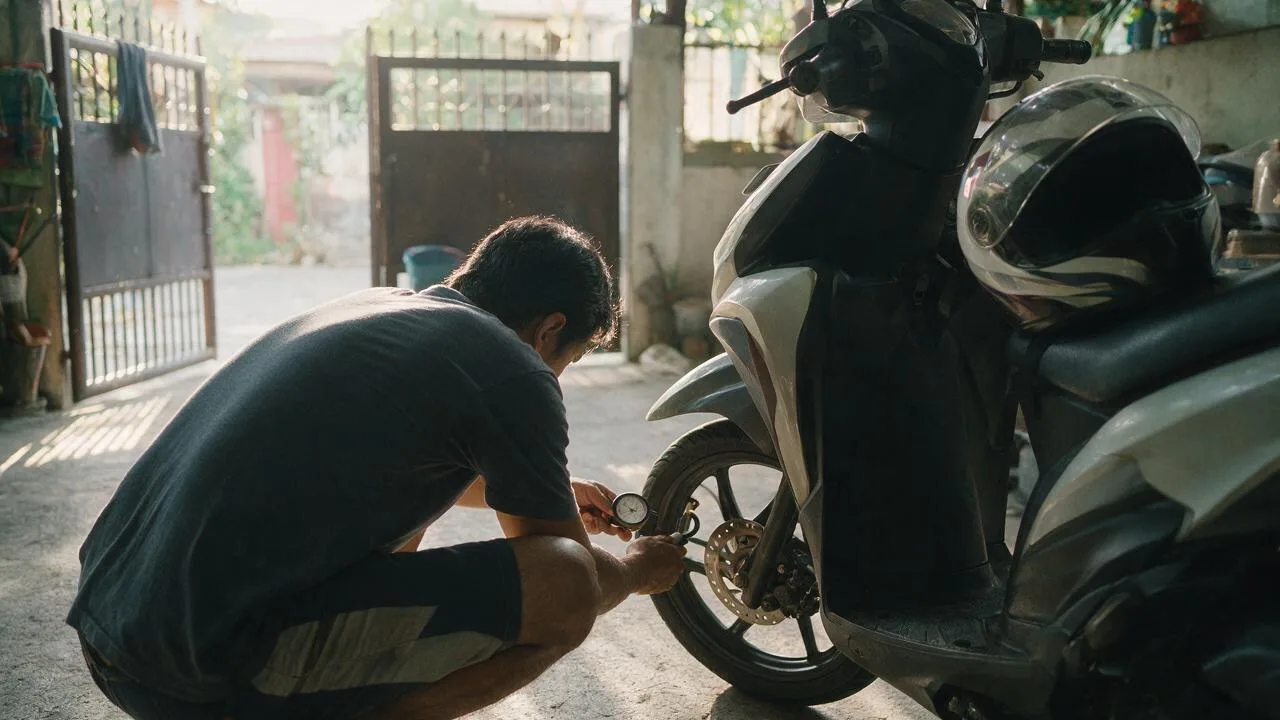
Before every ride, spend two minutes on tires, brakes, lights, chain or belt, and fluid leaks. Riders often use the acronym T-CLOCS (tires, controls, lights, oil, chassis, stands) for this. A simple version:
 AI-generated image
- Tires: look for cuts, nails and bulges. Squeeze or gauge them; pressure should match the sticker on the swingarm or the manual.
- Brakes: both levers firm, not spongy. Roll the bike forward and test each one.
- Lights and horn: headlight (high and low), tail light, brake light from both levers, signals, horn.
- Chain bikes: a quick look for slack and dry, rusty links.
- Under the bike: fresh drips of oil, coolant or brake fluid on the ground.
- Fuel: enough for the first stretch, since stations thin out on provincial roads.
What is on a weekly motorcycle maintenance checklist?
A weekly motorcycle maintenance checklist covers the things that change slowly: tire pressure with a gauge, oil level, chain tension and lube, brake pad thickness, and a wipe down. Daily riders and delivery riders should treat this as a real weekly job, not an occasional one.
- Tire pressure with a gauge, checked cold. Eyeballing a tire misses slow leaks.
- Engine oil level on the dipstick or sight glass, with the bike upright on level ground.
- Coolant level in the reservoir, if your bike is liquid cooled.
- Brake pads: look through the caliper. If the pad material is thin, book a replacement.
- Chain: check slack against the range printed on the swingarm or in the manual, then clean and lube if it looks dry or dirty.
- Wash and dry, especially after rain, mud or coastal roads like Infanta Boulevard where salt air speeds up rust.
How often should you lube and clean a motorcycle chain?
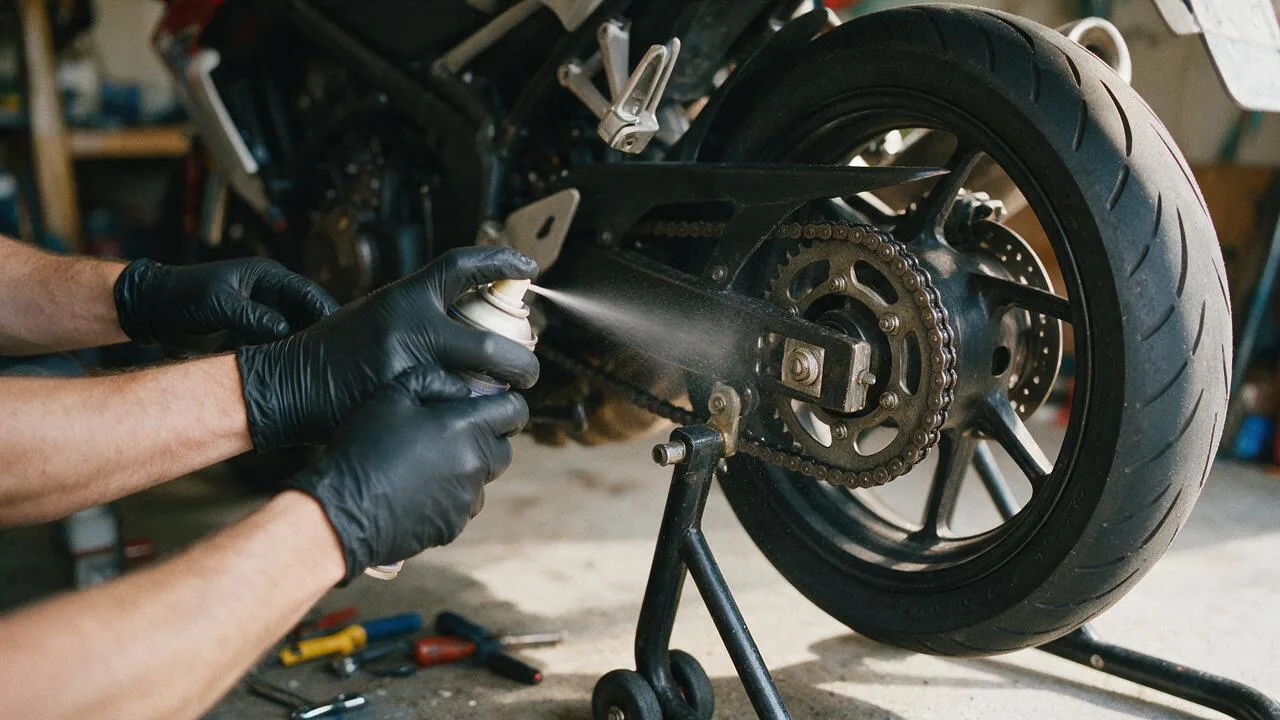
Lube a chain every few hundred kilometers in dry weather and after every ride in heavy rain; give it a proper clean roughly every other lube. Several maintenance guides aimed at Philippine riders suggest tightening the rhythm during habagat season, since rain strips lube off fast.
 AI-generated image
Clean with a chain cleaner or kerosene and a soft brush, never a pressure washer aimed at the O-rings. Lube a warm chain, let it set, then wipe off the excess so it does not fling onto the rear tire. Replace the chain and both sprockets together once the chain stretches past the adjustment limit or the sprocket teeth look hooked.
What does a scooter maintenance schedule look like?
A scooter maintenance schedule follows the same oil, tire and brake routine as any bike, plus regular inspection of the CVT: the drive belt, rollers, clutch and the air filter for the CVT housing. Scooters make up a large share of Philippine motorcycles, and the CVT is where they differ most.
- Drive belt: inspected for cracks, glazing, fraying and width wear at scheduled services. Manuals vary widely on replacement, and delivery riding or heavy loads wear belts faster. If your manual gives a range, stay near the short end.
- Rollers and clutch: worn rollers show up as slow takeoff or a shudder when pulling away.
- CVT cleaning: belt dust builds up inside the cover. Many shops clean it during the belt inspection.
- Final drive (gear) oil: often overlooked. Check your manual for its interval; it is separate from engine oil.
- Deep flood water: if water came up to the CVT housing, have it checked. Wet belts slip.
A snapped belt leaves you stranded, so book the inspection before a long ride to Caliraya Lake or up to Tagaytay, not after.
How often should you change motorcycle oil?
Change motorcycle oil at the kilometer or time interval your manual lists, whichever comes first. Smaller commuter bikes and scooters usually need it sooner than big bikes, and mineral oil needs changing sooner than fully synthetic.
A few rules that hold across brands:
- Use the viscosity and JASO rating the manual specifies. Most wet clutch bikes need JASO MA or MA2 oil; many scooters specify JASO MB.
- Change the oil filter at the intervals the manual lists.
- The first service on a new bike comes early. Do not skip it.
- If you mostly sit in traffic or ride short errands, go by the severe service interval.
What should you service every few thousand kilometers?
Every few thousand kilometers, a motorcycle maintenance schedule calls for a full service that bundles the bigger jobs so nothing slips. Your manual lists the exact items per interval; these are the ones that show up on almost every bike:
- Engine oil and filter
- Air filter cleaning or replacement (sooner if you ride dusty provincial roads)
- Spark plug inspection
- Throttle and clutch cable adjustment and lube
- Valve clearance check at the intervals the manual lists
- Brake pads and discs, wheel bearings, steering head
- Tire tread depth and age, plus sidewall cracks from sun exposure
- Battery terminals and charge (heat is hard on batteries)
- Chain and sprockets, or the CVT items above for scooters
What should you do once a year?
Once a year, or at the time intervals in your manual, handle the jobs that age with time rather than kilometers:
- Brake fluid: most manufacturers specify about every two years, because it absorbs moisture. Humidity here makes that interval worth keeping.
- Coolant: check condition yearly and replace at the manual's interval.
- Tires: rubber hardens with age even with plenty of tread left. Check the date code.
- Fork oil and seals: watch for oily film on the fork tubes.
- Registration paperwork: check your renewal schedule with the LTO.
The start of the rainy season is a good time for this. Our guide to rainy season motorcycle riding covers what else to prepare.
How do you keep track of your maintenance schedule?
Keep a service log per bike with the date, odometer reading and what was done, and set a reminder for the next job. Receipts in a drawer do not tell you when the chain was last replaced.
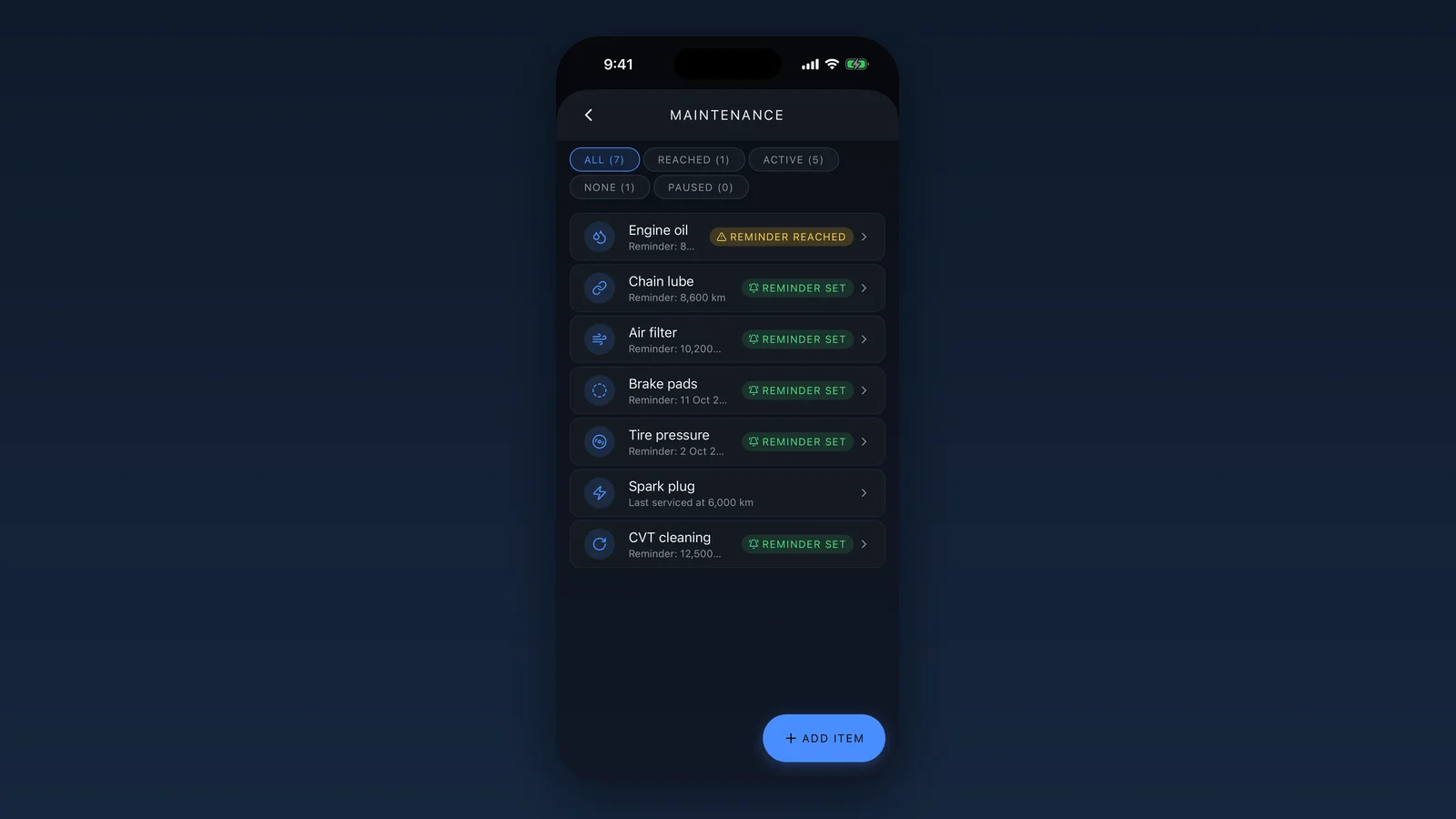
The Garage in the Waypoint app keeps this in one place. Add each of your bikes, then log every service with the odometer reading and notes, like the oil brand you used or which shop did the belt. Set reminders by kilometers for jobs like oil changes and chain kits, or by date for time based jobs like brake fluid. Each bike keeps its own service history, which helps if you run a scooter for errands and a bigger bike for weekend rides, or when you sell a bike and the buyer asks for records.
Where should you start with your motorcycle maintenance schedule?
Start by reading the maintenance table in your owner's manual and writing down the next due date and odometer reading for oil, chain or CVT, brake fluid and tires. Add the pre-ride and weekly checks as habits. If something feels off (a spongy brake lever, a slipping belt, a new noise), get it checked before your next long ride rather than waiting for the scheduled service. When a bike breaks down on the road, call 911 for emergencies and move to a safe spot first. Once the bike is sorted, browse rider destinations across the Philippines for your next weekend ride.