Solo motorcycle ride safety comes down to three habits: someone always knows your plan, you check in at set points, and you carry what you need to handle a breakdown or crash alone until help arrives. This checklist covers the plan, the kit, mountain dead zones and the exact steps to take when something goes wrong.
Quick facts
- 911 is the Philippines' national emergency hotline, free and open 24/7 for police, fire and medical help.
- Many mountain roads in Luzon, including stretches of the Cordillera and the Sierra Madre, have long gaps with no mobile signal.
- The rainy season runs roughly June to November, when roads get slick and landslides can close mountain roads.
- A DTI-certified helmet with a PS or ICC mark is the baseline for any ride, solo or group.
- Your license and registration should be current under LTO rules; check the LTO directly for what applies to you.
What should a solo rider's emergency plan include?
A solo rider's emergency plan names one contact, a planned path with stops, check-in times, and a "no word by this time" rule that tells your contact when to act. Write it down and send it before you leave, not from the road.
- [ ] One emergency contact who will actually answer their phone that day
- [ ] Your start point, overnight stop and planned destination, with the roads you intend to use
- [ ] Your bike's make, model, color and plate number
- [ ] Check-in points: fuel stops, town centers or any spot with steady signal
- [ ] A cut-off time: if your contact hears nothing by then, they call you, then the local police station, then 911
- [ ] Your blood type, allergies and medications, written on a card in your wallet and one in your jacket
Keep the plan simple enough that your contact can repeat it back. "Baguio by 3 p.m., text from Atok, home by Sunday 6 p.m." works better than a full itinerary nobody reads.
How often should you check in when riding alone?
Check in at every planned stop and at least every two to three hours of riding, even if it is only a one-line text. A short, regular message is what lets your contact notice when something is off.
Riding alone motorcycle tips for check-ins
- [ ] Text before you enter a known dead zone: "Going into no signal, expect me in Sagada by 4."
- [ ] Text again the moment signal returns
- [ ] Share live location with your contact if your phone supports it, and turn it off when you're home
- [ ] Agree that a missed check-in means "call me," not "panic." A dead battery is more common than a crash
- [ ] If you change plans, send the new plan before you ride off
How do you handle signal dead zones in the mountains?
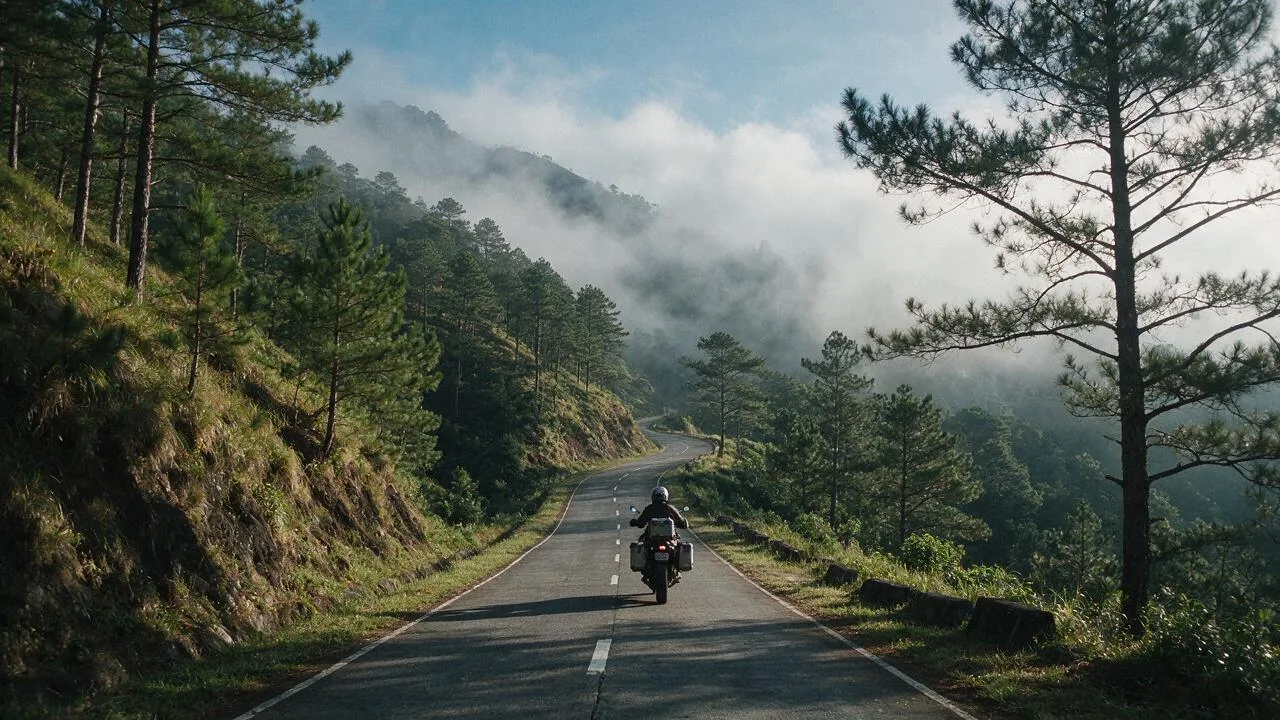
Treat dead zones as planned sections: know where they start, tell someone before you enter, and download offline maps ahead of time. You cannot call 911 from a stretch with zero coverage, so the plan has to work without your phone.
 AI-generated image
Roads to plan around include parts of Halsema Highway past the Highest Point on Halsema Highway, the approach to the Mt. Pulag Ranger Station in Benguet, and the Sierra Madre crossing on Marcos Highway toward Infanta Boulevard and the Real coastline in Quezon.
- [ ] Download offline maps for the whole area before leaving home
- [ ] Note the last town with signal before each gap and the first one after
- [ ] Fill up before the gap; fuel stations thin out on mountain roads
- [ ] Ride dead zones in daylight only, and with margin before dark
- [ ] If you're stopped in a dead zone, stay visible on the roadside and flag down passing vehicles rather than walking off alone
What to bring on a solo motorcycle ride?
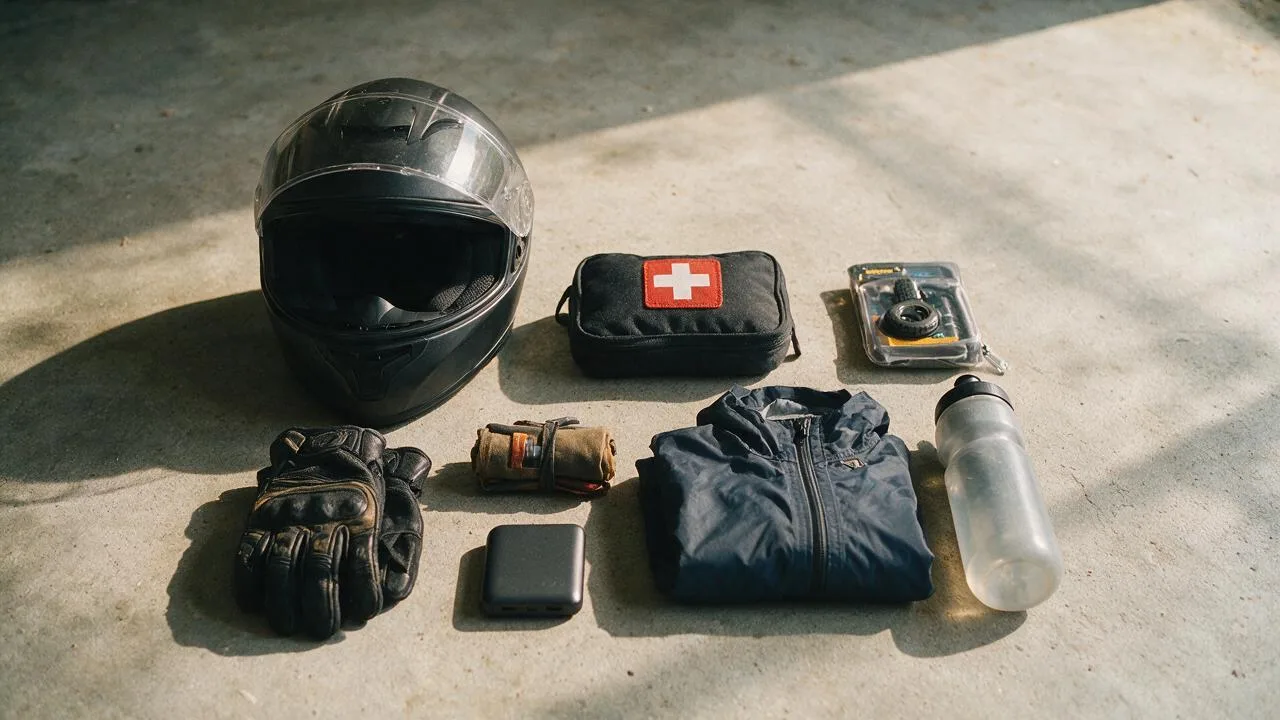
Bring enough to treat a minor injury, fix a flat, stay dry, prove who you are and pay your way out of a problem without a card terminal. Everything below fits in a tank bag or a small backpack.
 AI-generated image
Documents and money
- [ ] Driver's license and bike registration (OR/CR), plus photos of both on your phone
- [ ] One government ID besides your license
- [ ] Emergency contact and medical card
- [ ] Cash in small bills, split between two places; many provincial shops and vulcanizing stalls don't take cards or e-wallets
First aid
- [ ] Gauze, bandages and medical tape
- [ ] Antiseptic and wound wipes
- [ ] Pain relievers and any personal medication
- [ ] Emergency foil blanket
- [ ] Gloves for handling wounds
Tools and spares
- [ ] Tire plug kit and a small pump or CO2 inflator
- [ ] Basic tool set that fits your bike's bolts
- [ ] Spare fuses, zip ties and electrical tape
- [ ] Headlamp or small flashlight
Phone and weather
- [ ] Power bank and charging cable
- [ ] Raincoat or poncho, since mountain weather turns fast
- [ ] Water and something to eat
For riding through the wet months, our guide to rainy season motorcycle riding in the Philippines covers gear and road hazards in more detail.
What to do after a motorcycle crash when you're alone?
Get yourself and the bike out of traffic if you can move safely, check for injuries, then call 911 if anyone is hurt or the road is blocked. Only after that should you deal with the bike, photos and insurance.
- [ ] Turn off the engine and switch on your hazard lights
- [ ] Move off the road if you can do so without making an injury worse; if you have neck or back pain, stay still and wait for help
- [ ] Keep your helmet on if you suspect a head or neck injury
- [ ] Call 911 and state where you are: road name, nearest town, kilometer post if you can see one
- [ ] Message your emergency contact with your location
- [ ] Photograph the scene, the bike and any other vehicle involved
- [ ] Get names and contact details of other parties and witnesses
- [ ] Report the incident to the nearest police station if another party is involved or your insurer requires it
Adrenaline hides pain. Even if you feel fine, get checked at the nearest clinic or hospital before riding on.
What if your motorcycle breaks down in a remote area?
Pull fully off the road, make yourself visible, and work out whether it's a fix you can do or one that needs a tow. Then tell your contact where you are before your battery or signal runs out.
- [ ] Park on a straight stretch, never on a blind curve
- [ ] Hazards on; set your helmet or a bright item behind the bike if you have no reflector
- [ ] Try the easy checks first: fuel, kill switch, fuses, loose battery terminals
- [ ] For flats, plug and inflate, then ride slowly to the nearest vulcanizing shop
- [ ] If it can't be fixed on the spot, arrange a hauler or ask in the nearest barangay for help moving the bike
- [ ] Send your exact location to your contact and update them on your next step
How can your phone help you ride solo safely?
A phone set up before the ride saves the minutes you'd otherwise spend searching for numbers after a crash or breakdown. The Waypoint app has a Safety feature built for this.
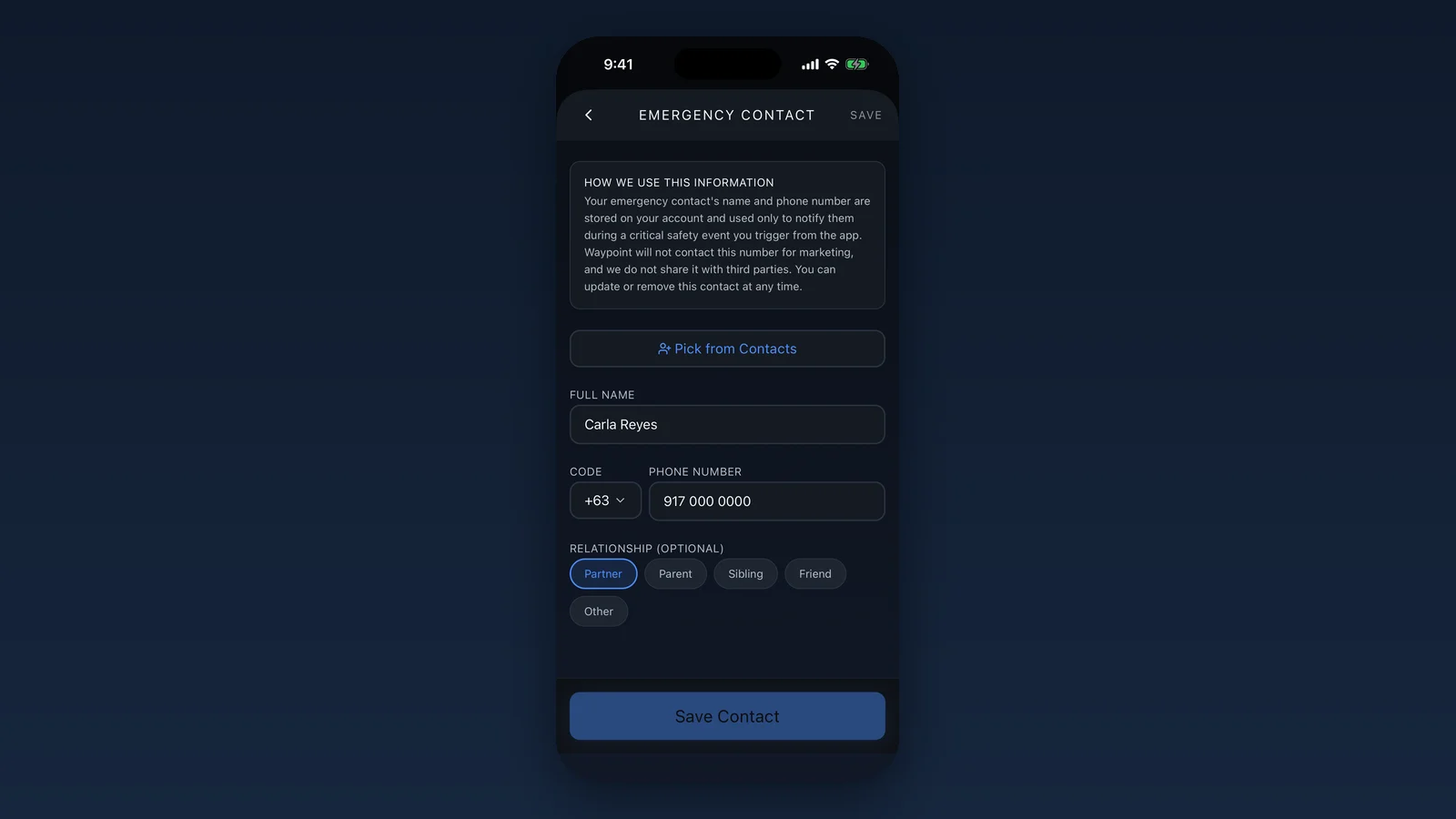
Here's what it does:
- Emergency contact: save one ahead of time so it's ready when you need it.
- One-tap SOS: raises an alert with your location in a single tap, useful when your hands are shaking or you're in gloves.
- Roadside assistance: lists bike-hauling providers you can contact by SMS, so you don't need a strong data connection to ask for a tow.
Set it up at home, check your contact is saved, and keep 911 as your first call for injuries. When you're ready to pick a destination, you can browse rider stops across the Philippines, from the Kaybiang Tunnel in Cavite to the Cordillera.
Your solo motorcycle ride safety checklist before you leave
Run through this the night before and again at your first stop.
- [ ] Plan sent to your emergency contact, with a cut-off time
- [ ] Bike checked: tires, brakes, chain, lights, fluids
- [ ] Documents, ID, medical card and cash packed
- [ ] First aid kit, tools and tire repair kit packed
- [ ] Offline maps downloaded; dead zones noted
- [ ] Phone and power bank charged
- [ ] 911 and your emergency contact ready on your phone
- [ ] Weather checked on PAGASA
Solo motorcycle ride safety isn't about riding scared. It's about making sure that if something goes wrong, someone knows, help can find you, and you have what you need to wait it out.