A safe motorcycle commute in Manila comes down to five habits: keep one lane per vehicle and follow posted motorcycle lanes, stay out of jeepney and bus blind spots, leave before the peak, carry rain gear every day, and service the bike more often than a highway rider would. Stop-and-go traffic is hard on both you and the machine.
Quick facts
- LTO Administrative Order AHS-2008-015 sets the rule of one lane per vehicle and prohibits lane splitting on roads and highways.
- Commonwealth Avenue in Quezon City has an exclusive motorcycle lane that the MMDA began enforcing in 2023.
- The MMDA's No Contact Apprehension Policy (NCAP) resumed on May 26, 2025, with cameras on roads that include EDSA, C5 and Commonwealth Avenue.
- EDSA's motorcycle lane policy has changed more than once. In May 2025 the MMDA said it was still consulting rider groups before issuing a resolution.
- For rain and flood warnings, follow PAGASA advisories. For emergencies, call 911.
What does a motorcycle commute in Manila actually demand?
It demands patience more than skill. Most of a Metro Manila ride is spent crawling in heat, with vehicles of every size a meter away. Riders who last on EDSA, Quezon Avenue and Roxas Boulevard ride predictably, assume nobody sees them, and plan around weather and traffic instead of fighting it.
Is lane splitting legal in the Philippines?
No. LTO Administrative Order AHS-2008-015 states "one lane per one vehicle" and prohibits lane splitting, which covers riding between vehicles in a lane already occupied. Lawmakers have also proposed an anti-lane splitting bill, but the existing LTO rule already applies. For the exact penalty, check with the LTO directly rather than relying on forum posts.
What this means on the road:
- Hold your lane position. Ride in the left or right third of your lane so drivers ahead can see you in their mirrors, and so you have an escape path.
- Do not squeeze between moving cars. A door opening, a jeepney pulling over or a car changing lanes without signaling leaves you no room at all.
- Expect cameras. With NCAP active on major MMDA roads, a violation can reach the registered owner by mail even when no enforcer is in sight.
- Keep a gap you can stop in, even at crawling speed.
Is there a motorcycle lane on EDSA?
The answer depends on the current MMDA policy, and that policy has moved several times. Before the 2025 EDSA rehabilitation, the MMDA announced it would bring back an exclusive motorcycle lane, then said in May 2025 that it wanted more dialogue with rider groups, who were divided on the idea. Check the MMDA's official social media pages and advisories before you rely on any lane arrangement along EDSA.
Commonwealth Avenue is clearer. It has an exclusive motorcycle lane marked on the road, and the MMDA has enforced it since 2023, including through NCAP cameras. Read the road markings and signs where you enter, since lane markings can be affected during road works.
On C5, España Boulevard, Quezon Avenue and Roxas Boulevard, follow the markings, signs and enforcers on the day.
How do you stay safe around jeepneys and buses?
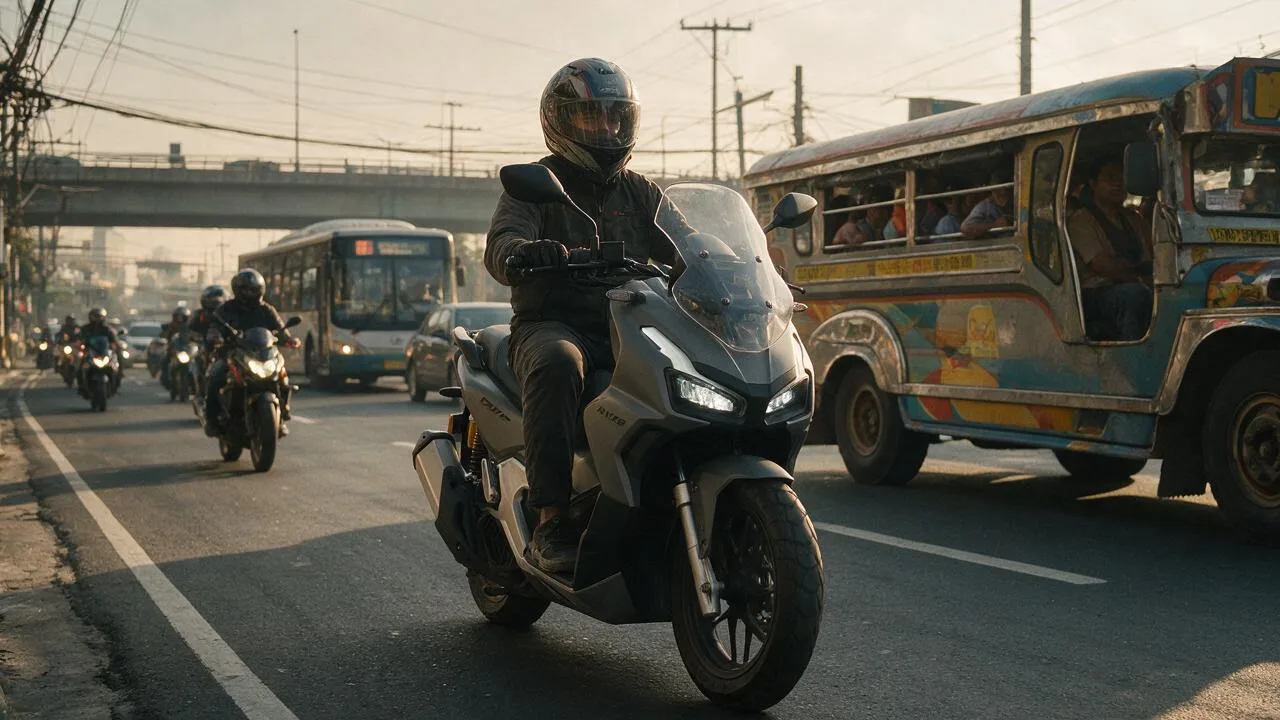
Stay where the driver can see you, and give them room to stop. Jeepneys and buses pull over to load and unload with little warning, often cutting across the lane edge riders like to use.
 AI-generated image
- Never sit beside the rear corner of a bus or jeepney. That is the blind spot. Either stay behind, far enough to see the driver's mirror, or pass decisively when it is safe.
- Watch the passengers, not only the vehicle. Someone raising a hand on the sidewalk means the jeepney in front will stop.
- Avoid the curbside lane near terminals and loading areas. Along Taft Avenue, Quezon Avenue and España, stops are frequent.
What are good motorcycle commuting tips for beginners?
Start with a familiar path, ride it off-peak first, and keep your gear ready by the door. Fewer decisions on the road means more attention for traffic.
What time should you leave?
Leave earlier than the rush, not during it. Plan a regular departure time, check a traffic app before you go, and have a second road in mind for days when your usual one is jammed or flooded. Friday evenings, paydays and the days before long weekends are usually heavier.
What gear do you need for a daily ride?
A full-face or modular helmet, gloves, closed shoes and a jacket you will actually wear in the heat. Mesh jackets help with airflow. Add these for commuting:
- Two-piece rain suit that fits over your work clothes, plus a waterproof bag cover or a top box.
- Something reflective or bright on your jacket or bag. Visibility matters most at dusk and in rain.
- A clear or light-tinted visor for evening rides home, or a spare.
How do you handle heat and hydration?
Drink water before you leave and keep a bottle within reach. Metro Manila traffic at midday combines sun, engine heat and asphalt heat. If you feel dizzy or get a headache, pull over somewhere shaded and safe, drink and rest before continuing.
How do you ride through rain and flood-prone streets?
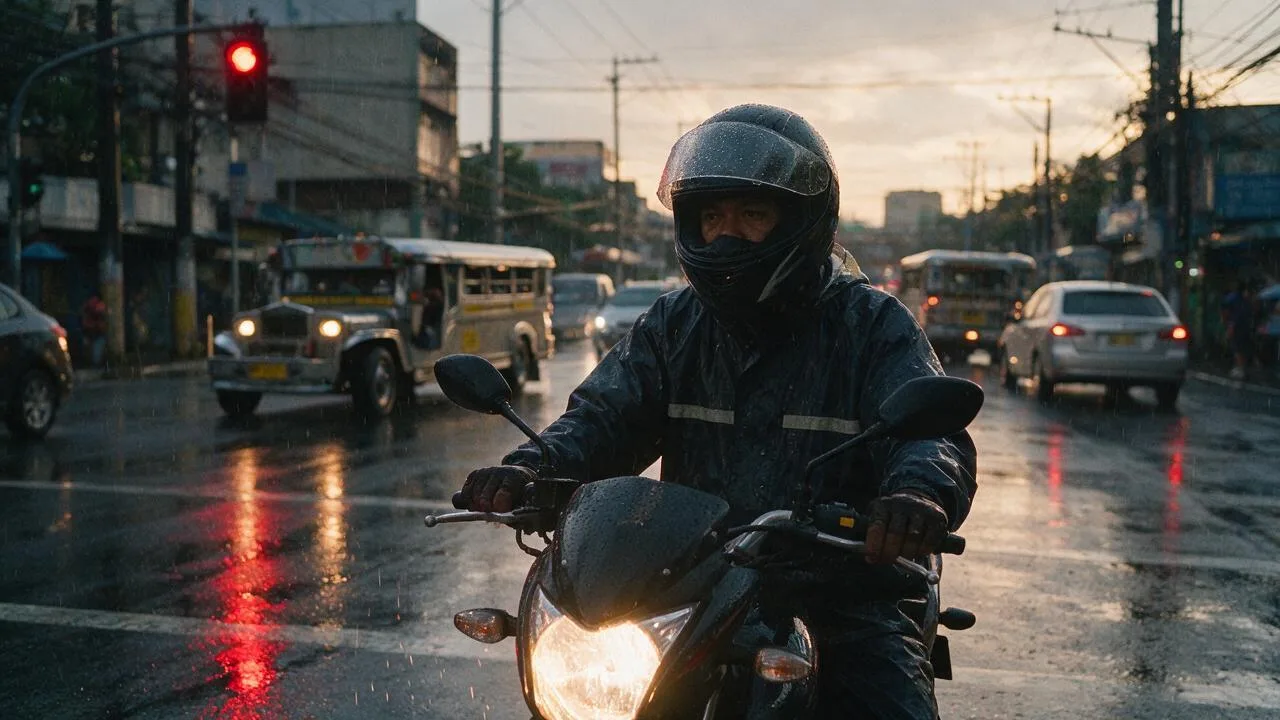
Slow down, add distance, and never ride into water you cannot see the bottom of. Road paint, manhole covers and steel plates turn slippery in the first minutes of rain, when oil lifts off the asphalt.
 AI-generated image
Streets around España Boulevard, parts of Manila near Taft Avenue and low areas along the bay are known to flood during heavy rain. Floodwater can hide open manholes and debris, and water in the air intake or exhaust can stall or damage an engine. If a street is flooding, turn around and wait it out. Follow PAGASA rainfall advisories and MMDA flood updates before you leave. We cover wet-weather riding in more detail in our guide to rainy season motorcycle riding in the Philippines.
Where should you park and how do you secure the bike?
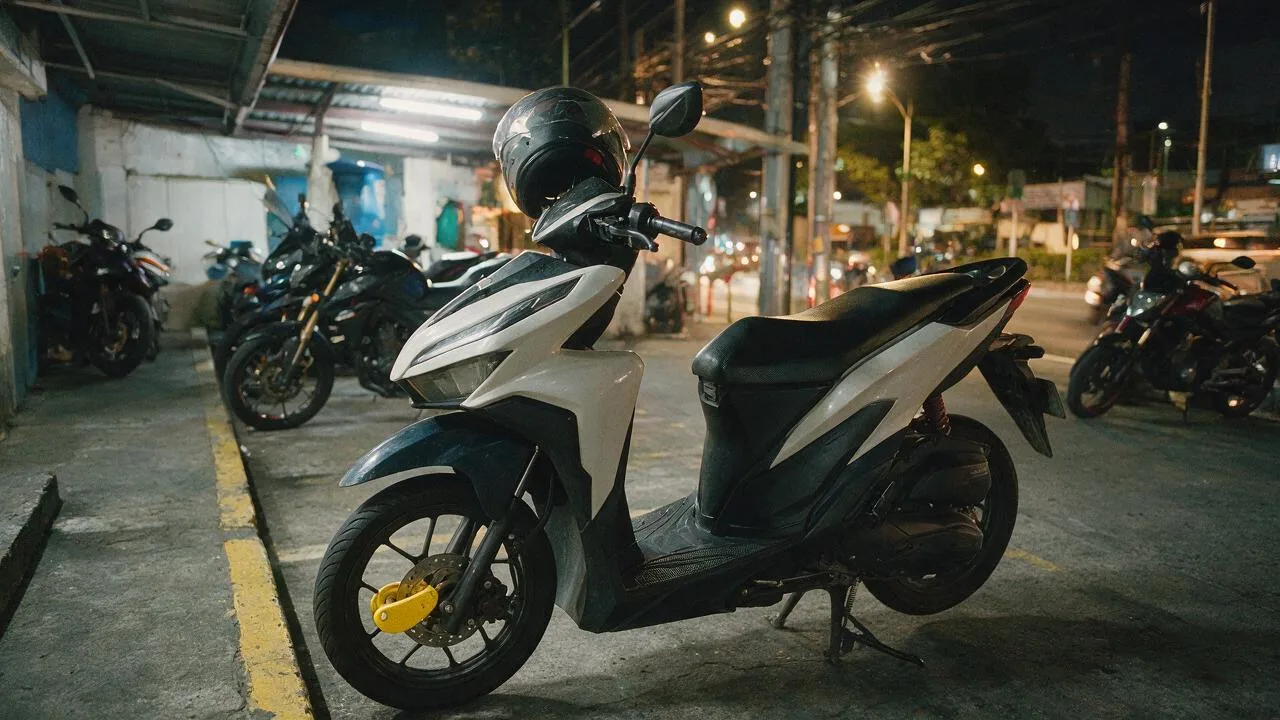
Use a designated motorcycle parking area with a guard or CCTV whenever you can. At the office, mall or train station, ask where motorcycles are allowed so you are not towed or ticketed.
 AI-generated image
- Lock the steering and add a disc lock or a chain to a fixed object.
- Take your helmet with you or lock it to the bike.
- Park where you can be seen from the street at night.
How does stop-and-go traffic wear out your motorcycle?
It wears out the parts you use most in traffic: clutch, brakes, and on scooters, the CVT. Keeping up with maintenance matters more for a commuter than for a weekend rider who covers the same kilometers on open road.
- Clutch: Do not ride with the clutch half-pulled for long stretches. Shift to neutral at long stops.
- Brakes: Constant braking wears pads quickly. Listen for squealing or grinding and check pad thickness often.
- CVT (scooters): The belt, rollers and clutch shoes wear with stop-and-go riding. Have the CVT cleaned and inspected at the intervals in your owner's manual.
- Overheating: On liquid-cooled bikes, watch the temperature gauge and coolant level. On air-cooled bikes, turn the engine off at very long stops if it is safe to do so.
- Chain: Clean and lube it after rainy rides.
Our motorcycle maintenance schedule lists what to check and when. Fuel adds up on a daily ride too, so see this week's pump prices before you plan your weekly budget.
How do you keep track of service when you ride every day?
Log every service with the odometer reading, and set a reminder for the next one. Daily riders pile up kilometers faster than they expect.
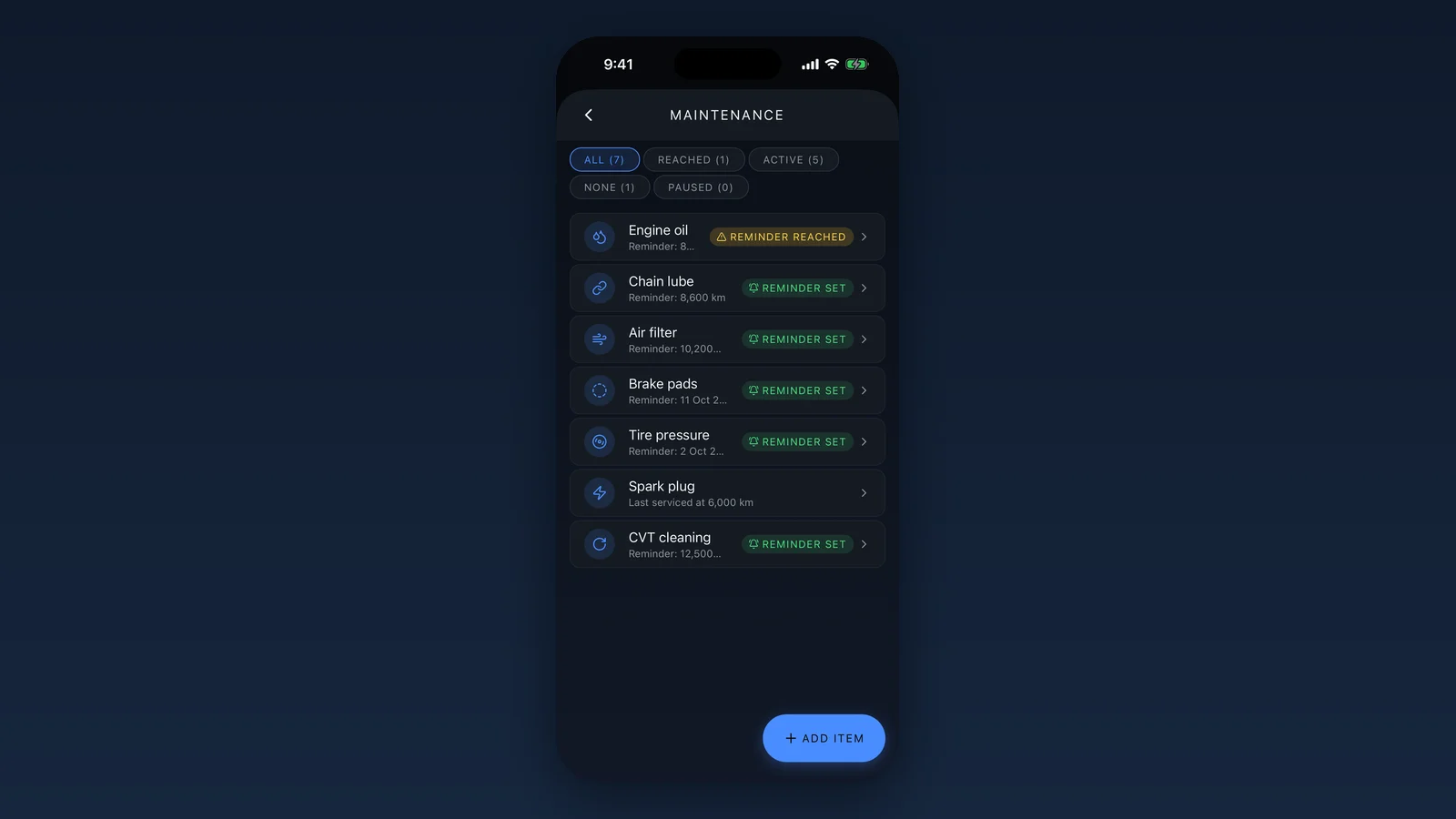
In the Waypoint Garage, you add your bikes and mods, then log each service with its odometer reading and notes, such as "new brake pads" or "CVT cleaned." You can set reminders by kilometers or by date, so an oil change or brake check comes up when it is due. Each bike keeps its own service history, which helps if you own a commuter scooter and a weekend bike. If you record a ride with Just Ride, it is saved to that bike's ride history with its distance and time.
Where can you ride after work or on the weekend?
From the eastern side of Metro Manila, riders head up to the Pililla Wind Farm in Rizal. From the south, a Saturday morning run to Tagaytay Ridge Viewpoint in Cavite is a classic. Leave early to beat the weekend traffic out of the city. For more options near Manila and across Luzon, browse rider destinations by region.
Final checklist for your motorcycle commute in Manila
Daily riding gets safer when it becomes routine. Before you head out each day:
- Helmet, gloves, jacket, closed shoes on.
- Rain suit and bag cover packed.
- Tire pressure and brakes checked, lights working.
- Departure time set before the peak, with a backup road in mind.
- Latest MMDA and PAGASA advisories checked.
- Water bottle in the bag.
- Next service due date or odometer reading noted.
Ride in your lane, stay visible, and give buses and jeepneys space. Treat your motorcycle commute in Manila as a skill you refine every week.